
One of the most common questions parents ask after starting lessons is:
how long does it take to see progress in music lessons?
The most honest answer is: it depends — largely on practice and consistency. But progress doesn’t always show up the way people expect, especially in the beginning.
At Grosse Pointe Music Academy, we spend a lot of time helping families understand what real progress looks like and when it typically starts to feel reassuring.
Practice Plays the Biggest Role
The single biggest factor in how quickly progress appears is practice between lessons.
Students who practice regularly—even for short periods—tend to move forward steadily. Students who miss lessons or rarely practice often feel like they’re starting over each week.
That doesn’t mean perfection is required. It just means consistency matters more than intensity early on.
Early Progress Isn’t Always Obvious
One thing parents often miss in the first one to two months is that a lot of learning happens mentally before it becomes audible—especially with younger kids.
Early signs of progress often include:
- Concepts starting to “sink in”
- Better awareness of notes or rhythm
- Improved posture or hand position
- Increased confidence during lessons
Even if the music doesn’t sound dramatically better yet, those internal changes are important. They’re the foundation that later progress is built on.
Missed Lessons Slow Things Down
In our experience, missed lessons slow early progress more than almost anything else.
Life happens, and an occasional miss isn’t a big deal. But frequent gaps make it harder for students to build momentum. Music learning relies on continuity, especially at the beginning when everything is new.
Progress Looks Different Depending on the Instrument
Not all instruments show progress at the same pace.
Piano often feels easier early on because:
- You press a key and get a sound immediately
- You don’t have to hold the instrument
- Basic coordination develops quickly
Instruments like guitar, violin, drums, or voice may take a bit longer before things sound “right,” because they require more physical coordination. That doesn’t mean progress isn’t happening—it just looks different.
Progress Isn’t Always Audible at First
It’s completely fair to say that progress isn’t always audible right away, but it’s still very real.
Many students experience a quiet phase where understanding improves before performance catches up. This is normal and temporary.
When Do Parents Usually Feel Reassured?
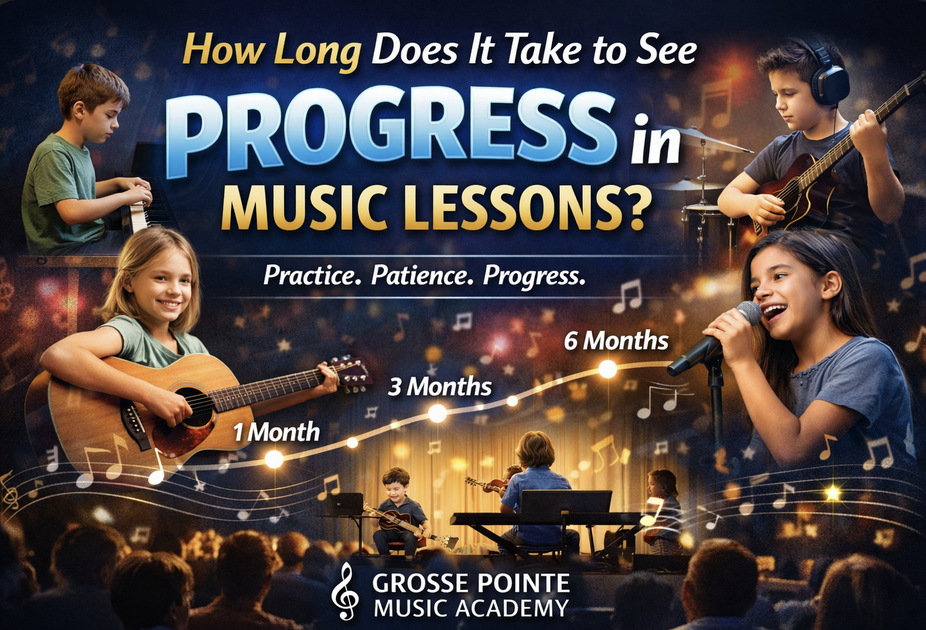
For most families, reassurance sets in around three to six months.
By that point, students typically:
- Play recognizable songs or sections
- Show better control and confidence
- Understand how to practice more independently
The first three months are especially important. That’s the period where patience pays off the most.
“What If My Child Isn’t Talented?”
This concern comes up often, and it’s worth addressing directly.
Pure talent is rare. Most people don’t start out naturally good—they learn. Progress in music is far more about exposure, repetition, and guidance than innate ability.
With consistent lessons and reasonable practice, most students make meaningful progress regardless of where they start.
Recitals, Songs, and Benchmarks
Progress doesn’t have to mean perfection.
Being able to:
- Play part of a song
- Perform a short piece at a recital
- Recognize improvement from lesson to lesson
…are all valid benchmarks. Recitals, in particular, give students a clear goal and help parents see how far their child has come.
So, How Long Does It Take to See Progress in Music Lessons?
In general:
- Some progress happens immediately, even if it’s subtle
- Audible progress often takes a few months
- Three to six months is a common reassurance window
- Consistent practice and attendance matter most
If you’re in the early stages, patience is key—especially in the first three months. Learning music is a gradual process, but the results compound over time.
If you have questions about what progress should look like for your child or yourself, we’re always happy to talk through expectations. Enrollment is flexible, and our goal is steady, long-term growth—not rushed results.
Previous Blog Post: How Long Are Music Lessons Supposed to Be?
Leave a Reply